
Reviewed · QUEENSTOWN TO CHRISTCHURCH SCENIC COACH TRIPS
Queenstown to Dunedin with Taieri Gorge Train One-Way Tour
The best part of this Queenstown to Dunedin trip is that the transfer becomes a proper day out. You cross the old gold country by road, pause in tiny historic settlements, then board the Taieri Gorge Train for a two-hour rail journey through ravines, viaducts, and hand-cut tunnels. It is a fine way to connect two South Island cities without spending the whole day on an ordinary coach.
I like the small maximum group of 15 and the chance to see places most direct routes skip, especially St Bathans and its unusual Blue Lake. I also like the practical luggage allowance, one large and one small bag per person. The main drawback is the early 6:30 am start and the long, full schedule, with lunch not included and no hotel drop-off in Dunedin.
Key details before you book
- A road-and-rail journey: Travel from Queenstown to Pukerangi by guided Mercedes-Benz vehicle, then continue to Dunedin by heritage train.
- Three Central Otago stops: See Dunstan House in Clyde, the Ophir suspension bridge, and the old settlement of St Bathans.
- The Taieri Gorge finale: Spend about two hours on a scenic train running through tunnels, viaducts, cliffs, and river valleys.
- Small-group format: The tour accepts a maximum of 15 people, which should make the road portion more personal than a large coach trip.
- Useful for a one-way move: Your luggage travels with you, but you must arrange your own hotel transfer after reaching Dunedin.
- Plan for a long morning: Pickup begins at 6:30 am, and the total experience lasts about 10 hours.
Why this makes a better transfer than a standard bus ride
At $179.97 per person, this is not the cheapest way to get from Queenstown to Dunedin. You are paying for far more than transport, though. The price includes hotel pickup from selected Queenstown locations, a guided drive through Central Otago, stops at three historic sites, luggage space, and the Taieri Gorge Train ticket.
I see the value most clearly if you already want to visit both cities and have one day available for the journey. A plain transfer would get you there, but this trip gives the route a story. Gold mining shaped the towns along the way, and the railway follows an old route through some of Otago’s most dramatic country.
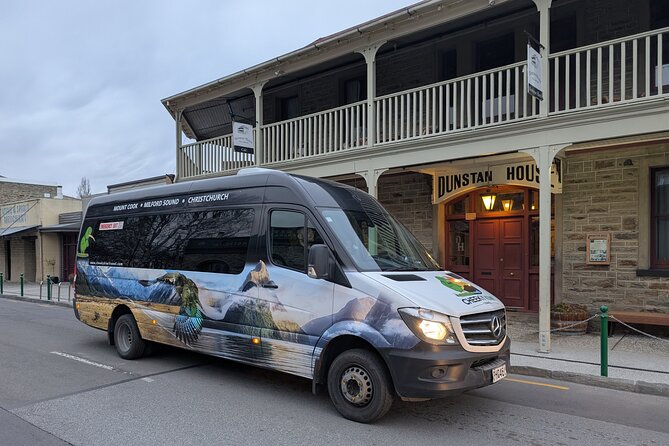
The road portion takes place in a Mercedes-Benz vehicle, with a maximum group size of 15. That matters on a full-day trip. You have a better chance of hearing the guide, asking questions, and getting a little breathing room than you would on a large sightseeing bus.
The tradeoff is pace. This is not a slow, flexible road trip where you stop whenever a view catches your eye. The schedule has several short visits before the train, and you need to be ready early. If you want a relaxed morning in Queenstown, book another way to Dunedin.
More Coach Trips out of Queenstown:
- Queenstown to Christchurch One-Way Tour via Mt Cook & Lake Tekapo
★ 4.5 · 134 reviews - Queenstown to Christchurch via Mt Cook One-Way Tour
★ 4.7 · 79 reviews - Mount Cook Full-Day Tour: Queenstown to Christchurch
★ 3.7 · 61 reviews
Leaving Queenstown through Gibbston and Kawarau Gorge
The day begins with pickup at about 6:30 am from selected Queenstown hotels. Your first stretch takes you east through the Gibbston wine region and the Kawarau Gorge, shifting quickly from Queenstown’s alpine setting to the drier interior of Central Otago.
The guide provides the context as you go. This area is tied to the gold rush routes that helped shape early settlement, and the drive makes it easier to understand how isolated these communities once were. The gorge also gives the morning a strong visual start, with steep rock walls and a road that follows the contours of the region.
Because pickup points are limited, check the exact meeting details when you book. The tour offers pickup, but it does not promise pickup from every Queenstown address.
Lake Dunstan and gold country around Cromwell
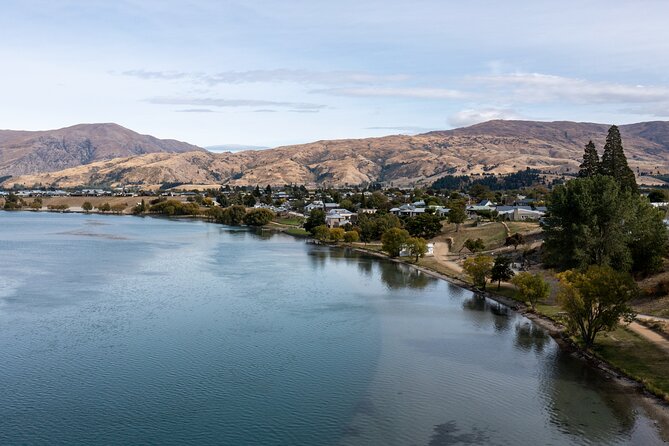
The route continues beside Lake Dunstan and through Cromwell, a town associated with gold mining and positioned near the meeting point of the Clutha and Kawarau Rivers. This is a useful transition in the day. The blue water and wide open country give way to smaller settlements and old mining districts.
I like this part because the journey is not just a sequence of unrelated photo stops. The guide can connect the modern roads and reservoirs with the older transport routes that carried people and supplies through Central Otago. You get a sense of how the region developed, rather than simply passing through it at highway speed.
There is no separate long visit listed for Cromwell, so treat it mainly as part of the scenic drive. The most focused stops come later in Clyde, Ophir, and St Bathans.
Morning tea at Clyde’s Dunstan House
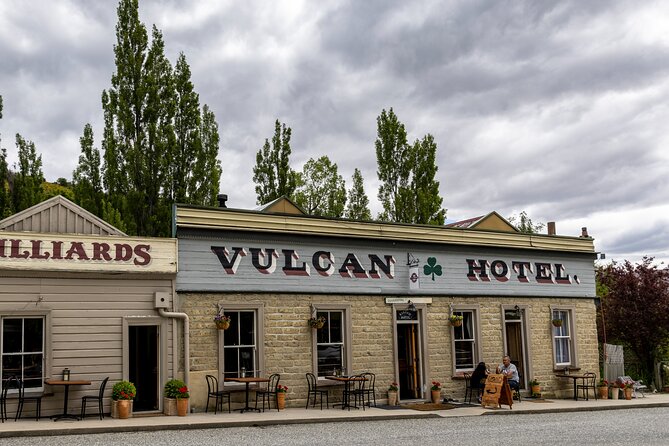
The first scheduled stop is Dunstan House and Cafe Clyde, where you have about 15 minutes. The building dates from 1898 and once served gold prospectors and other people moving through the district. It has been restored as a hotel, with antique details and a more old-fashioned feel than a modern roadside café.
Morning tea is available to buy, but it is not included in the tour price. That small detail matters, since lunch is also not included. I would plan to purchase something here if you want food early in the day, though 15 minutes is a short window.
Clyde is one of the places where the trip’s theme comes together neatly. You are not being shown a replica mining town built for tourists. You are stopping at a real historic building still used for hospitality, with just enough time to look around and refresh before continuing.
More Rail Trips from Queenstown:
A quick photo stop at Ophir Bridge Road
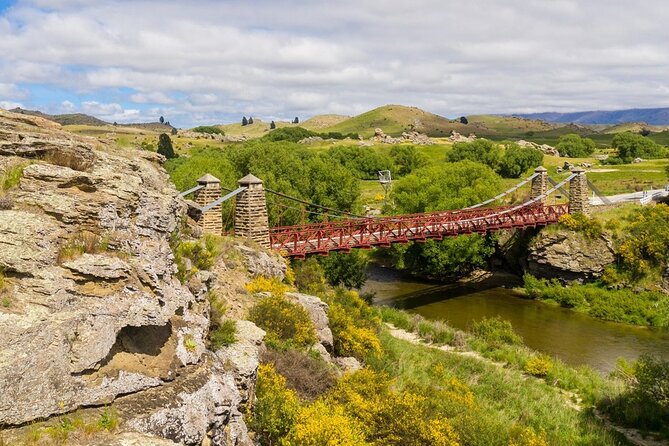
The stop at Ophir Bridge Road lasts only about five minutes, so think of it as a picture break rather than a walk. The main subject is an 1880 suspension bridge crossing the Manuherikia River.
The bridge reflects the engineering needs of isolated 19th-century settlements. It also gives you a short chance to stretch your legs and see one of the older structures linked to the region’s transport network.
Five minutes goes quickly. Have your camera ready, and do not expect time for a long wander. This stop works best as a sharp pause between the longer Clyde and St Bathans visits.
St Bathans and the Blue Lake
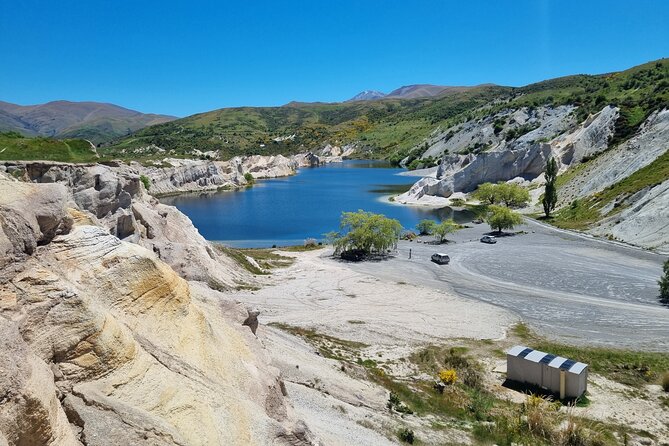
St Bathans gets about 30 minutes, making it the most substantial stop before the train. This former gold-mining settlement now has the quiet, slightly eerie air of a place that has moved into another era. Old buildings remain, and the town’s small scale makes it easy to look around on foot.
The Blue Lake is the main natural feature. It was created by mining, and its color and stark setting give the stop a striking quality. The sight is a reminder that gold mining did not simply leave behind buildings and stories. It also reshaped the ground itself.
Thirty minutes is enough for a short walk and photographs, but not for an extended exploration. You should wear comfortable shoes and be ready for some walking over uneven ground. The tour specifically calls for moderate physical fitness and is not recommended for people with severe mobility difficulties.
St Bathans may be the most rewarding road stop for anyone interested in old settlements and the less polished side of Central Otago. It feels quieter and more atmospheric than the better-known towns, though the brief visit means you will only get an introduction.
Boarding the train at remote Pukerangi
After the road journey, you reach Pukerangi in the highlands and board the Taieri Gorge Train. This is the handoff point between the road guide and the railway portion, so you say goodbye to the guide before taking your seat.
That change is worth understanding in advance. The road portion is fully guided, but the train ride is its own experience. You are not accompanied by the same guide all the way to your Dunedin hotel, and there is no hotel drop-off included once you arrive.
Pukerangi is a remote station rather than a city terminal. That adds to the feeling that the train is following an old route across country, but it also means you should keep your belongings organized during the changeover. The tour allows one large and one small piece of luggage per person, which is a reasonable amount for a one-way trip.
Two hours on the Taieri Gorge Railway
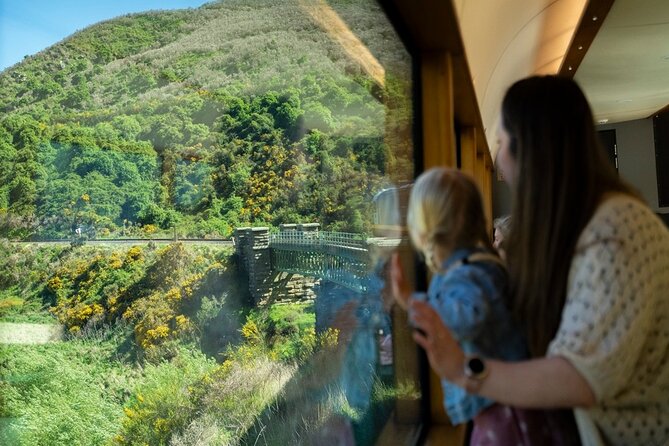
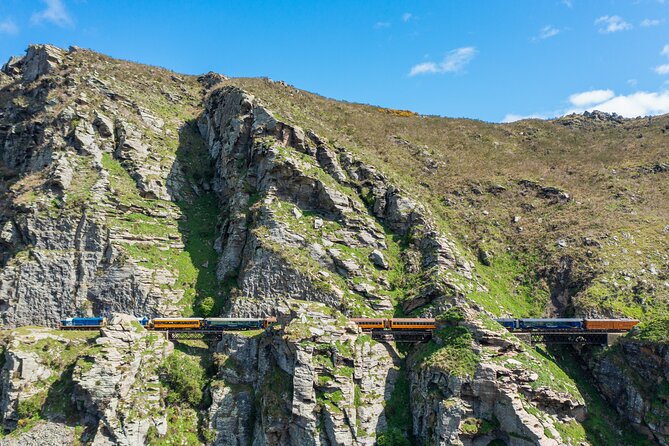
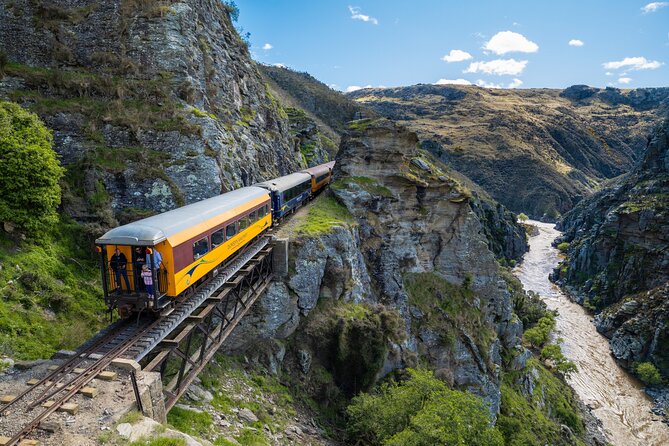
The train ride lasts about two hours and is the great payoff of the day. The railway runs through the Taieri Gorge, with views of steep cliffs, river valleys, viaducts, and tunnels cut through the rock.
The line’s appeal is not just the scenery. The route follows an old rail corridor tied to Central Otago’s mining era, so the train gives you a sense of the engineering needed to connect remote settlements. Viaduct crossings and hand-carved tunnels make the journey feel more substantial than a simple scenic loop.
You will want to keep your camera handy, but do not spend the entire ride looking through a screen. The gorge changes quickly, and the best pleasure is watching the train work its way through the narrow sections and open views.
The train is also a sensible way to finish a long day in a vehicle. You can settle into a different rhythm, watch the country pass, and arrive in Dunedin without having to navigate another long road section yourself. The two-hour duration is long enough to feel worthwhile but short enough to keep the 10-hour schedule moving.
Arriving at Dunedin Railway Station
The journey ends at Dunedin Railway Station, one of the city’s most ornate buildings. It is a fitting arrival point after a day centered on old transport routes and gold-era settlement.
You step off the train in central Dunedin, but the tour does not include a hotel transfer. If you have heavy luggage or accommodation outside the central area, arrange your onward transport before the day begins. That is the main practical weakness of using this as a city-to-city transfer.
The finish also means you arrive with part of the day already gone. That is fine if you are staying overnight or have planned a later activity. It is less suitable if you need to check in immediately, catch another timed connection, or start a full Dunedin sightseeing program that same afternoon.
Food, luggage, and comfort on a long day
Morning tea at Dunstan House and lunch are both your responsibility. Food is available at the morning stop, but the visit lasts only 15 minutes. Since the start is early and the day runs for about 10 hours, bring something small to eat if you prefer not to rely on the stop.
The tour includes space for one large and one small bag per person. That is helpful for a one-way trip, but it is not an invitation to bring several suitcases. Pack the basics you need for the day, and keep anything needed during the road section easy to reach.
Comfortable clothing and walking shoes make sense. You will not be hiking for hours, but the day includes several short walks, the St Bathans visit, station boarding, and movement around the train. Children aged seven and under must use a safety car seat. You can bring your own, or arrange one for NZD $20 with 24 hours notice.
The experience has a maximum of 15 people, which is one of its strongest practical features. It keeps the road journey more manageable and gives the guide a chance to address questions. Colin is one guide associated with this route, and his detailed knowledge of the countryside and willingness to answer questions were specifically praised. The operator may assign another guide, so do not book on the assumption that Colin will always lead your departure.
Weather, cancellations, and who should book
The trip requires good weather. If poor conditions force a cancellation, you can choose another date or receive a full refund. Minimum numbers also apply, so the operator can cancel if too few people are booked, with an alternative or full refund offered.
For your own plans, allow flexibility around the date if possible. This is especially important if you are using the tour as part of a tight Queenstown to Dunedin itinerary.
I would recommend it most strongly to you if:
- You want a scenic one-way connection rather than a basic transfer.
- You enjoy rail journeys, old settlements, and regional history.
- You are comfortable starting early and spending most of a day on the move.
- You have moderate fitness and can manage short walks.
- You are carrying a manageable amount of luggage.
- You plan to stay in Dunedin after arrival and can arrange your own hotel transfer.
I would hesitate if you need door-to-door service at both ends, dislike early starts, or want a relaxed day with long stops. The schedule is full, and the stop at Ophir is especially brief.
Is the Queenstown to Dunedin train tour worth it?
Yes, for the right kind of day. At $179.97, the tour earns its price through the combination of guided road travel, small-group transport, historic stops, luggage space, and the included Taieri Gorge Train ticket. The route gives you more substance than a standard transfer and turns a necessary travel day into one of the more memorable parts of your South Island trip.
Book it if the journey itself matters to you. Skip it if you only need to reach Dunedin quickly, want hotel drop-off, or prefer to control your own stops and meal times. The early start, limited food breaks, and 10-hour duration are real considerations, but the old gold towns and final rail run make this a strong choice for curious, active visitors who want to see Central Otago along the way.
FAQ
What time does the tour start?
The tour starts at 6:30 am. Hotel pickup is offered from selected Queenstown locations.
How long does the full experience take?
The journey lasts approximately 10 hours.
Where does the train portion begin?
You board the Taieri Gorge Train at Pukerangi after the guided road journey from Queenstown.
How long is the Taieri Gorge Train ride?
The train journey from Pukerangi to Dunedin takes about two hours.
Is food included?
No. Morning tea is available for purchase at Dunstan House and Cafe Clyde, and lunch is not included.
Can I bring luggage?
Yes. The tour provides space for one large and one small piece of luggage per person.
Is hotel drop-off included in Dunedin?
No. The tour ends at Dunedin Railway Station, and you must arrange your own hotel transfer.
Is the tour suitable for children?
Children aged seven and under must travel in a child safety car seat. You may bring your own, or one can be provided for NZD $20 with 24 hours notice.
Latest Queenstown trips added
- Wines and Views Private Wine Tour of Otago from Queenstown★ 5.0 · 4 reviews
- Mt Aspiring Full Day Canyon ex Queenstown or Wanaka★ 5.0 · 12 reviews
- TSS Earnslaw Cruise & Walter Peak Garden to Table in Queenstown★ 5.0 · 13 reviews
- 30-Minute High-Speed Thrill Queenstown Jet Boat Adventure★ 5.0 · 9 reviews
- Ultimate Off-Roading In Gibbston Valley★ 5.0 · 6 reviews
- Tunnels to Station On E-Bikes★ 5.0 · 3 reviews
- AuthenticAs Paradise – Professional Photography & Exclusive Guided 4WD Tour★ 5.0 · 3 reviews
- Queenstown Sunrise Glacier Scenic Flight by Glenorchy Air★ 5.0 · 4 reviews
Queenstown to Christchurch Scenic Coach Trips, compared.
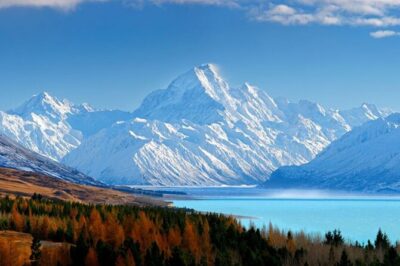
Queenstown to Christchurch One-Way Tour via Mt Cook & Lake Tekapo
Read our review →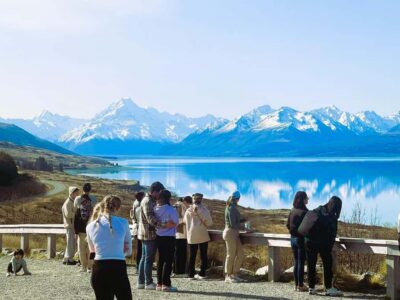
Queenstown to Christchurch via Mt Cook One-Way Tour
Read our review →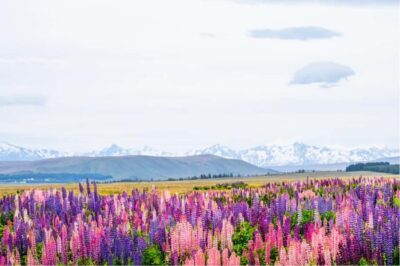
Mount Cook Full-Day Tour: Queenstown to Christchurch
Read our review →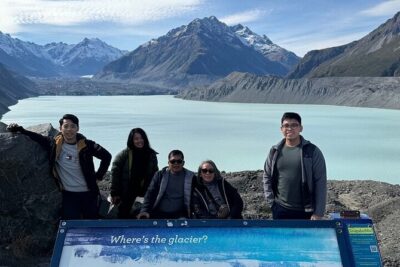
Queenstown to Christchurch One Way Tour Via Lake Tekapo & Mt Cook
Read our review →
Queenstown to Christchurch via Mt Cook (1 way) (Small Group)
Read our review →
Queenstown to Christchurch via Franz Josef 2-Day Small-Group Tour
Read our review →
2 Day West Coast Glaciers and TranzAlpine Train: Queenstown to Christchurch
Read our review →
Mount Cook Tour: Finish at Queenstown, Christchurch or Dunedin
Read our review →Browse the lists this tour appears in