
Reviewed · QUEENSTOWN SKYDIVING
Queenstown: Tandem Skydive Experience
Queenstown’s big thrill comes with an even bigger view: you’ll step from a plane above the Southern Lakes, freefall beside snow-capped peaks at up to 200 kph, then float beneath a parachute over the Wakatipu Basin. The scenery begins before the jump, during the climb in the aircraft.
I like the choice of three jump heights, since you can match the price and freefall time to your nerves. I also like the friendly, steady support from the tandem masters. Chris, Tim, Tain, and others are repeatedly praised for explaining each step and keeping first-timers calm. The main drawback is the extra cost of photo and video packages, plus the fact that weather can delay or cancel your jump.
Key points before you book
- Choose 15,000 feet for the longest freefall: The top option gives you up to 60 seconds in the air, compared with 30 seconds from 9,000 feet.
- Expect mountain and lake views from start to finish: You’ll see Queenstown, Lake Wakatipu, the Remarkables, and the wider Southern Lakes from the aircraft and parachute.
- Plan on three to four hours: The time includes central Queenstown transfers, check-in, preparation, the scenic flight, your jump, and return transport.
- The tandem master matters: Guides including Chris, Tim, Tain, Luke, and Wilmer are noted for calm explanations and reassuring manner.
- Budget extra for memories: Photos and video are not included, and several people found the packages expensive.
- Weather is part of the deal: A clear forecast is never a guarantee, so avoid scheduling this on the last few hours of your Queenstown stay.
Why this Queenstown jump is about more than the adrenaline
A tandem skydive can be a blur of noise, wind, and nerves. Queenstown adds a rare bonus: the view remains the main event even when your stomach is catching up with you.
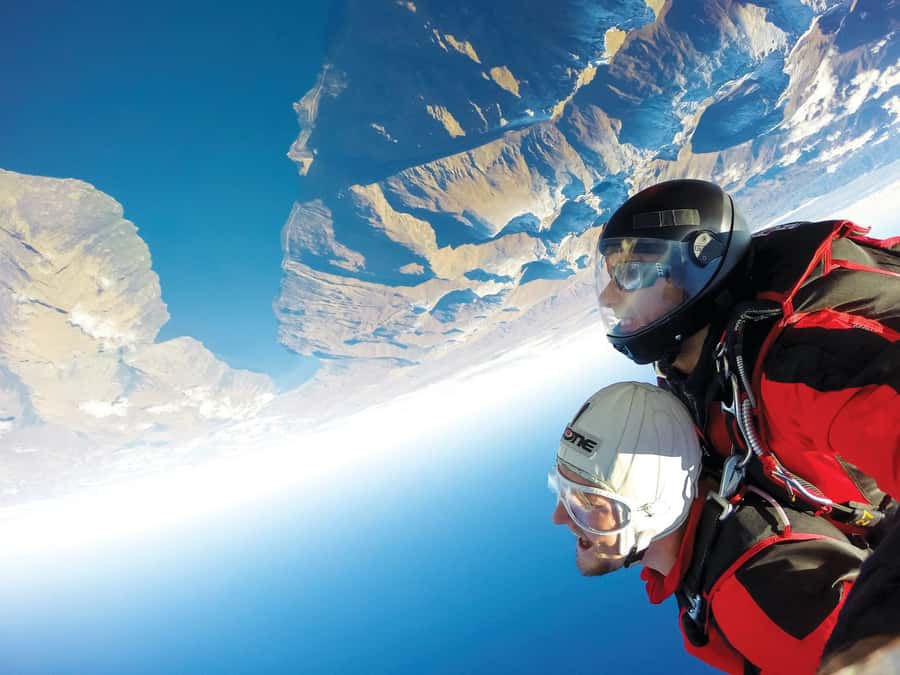
From the aircraft, you look across a dramatic mix of snow-capped mountains, blue water, and broad valleys. The jump takes place above the Southern Lakes, with the Wakatipu Basin below. You are not simply dropping over an anonymous field. You are freefalling in one of New Zealand’s most memorable settings.
The price is listed at $214 per person. That covers the jump, tandem master, equipment, scenic flight, and return transfer, but not the photo or video package. For a first-time jump in Queenstown, I see reasonable value in the base price, especially because transport and the flight are already bundled in. Still, the total cost can climb once you add recorded memories, clothing, snacks, or drinks at the base.
You should also think of the $214 as the cost of a half-day activity, not a quick amusement ride. The actual freefall is short, even from the highest platform. The three to four hours cover the whole process, and some of that may involve waiting for the right flight window.
More Skydives over Queenstown:
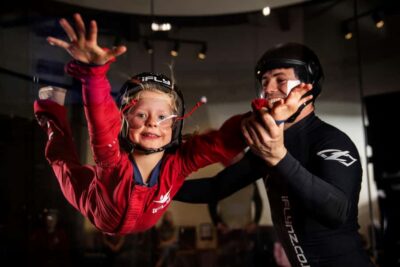
- NZONE Skydive Queenstown
★ 4.5 · 1,438 reviews - iFLY Indoor Skydiving Queenstown
★ 5.0 · 245 reviews - Queenstown: Ticket for 2 Indoor Skydiving Flights
★ 4.4 · 15 reviews
Starting at 35 Shotover Street in central Queenstown
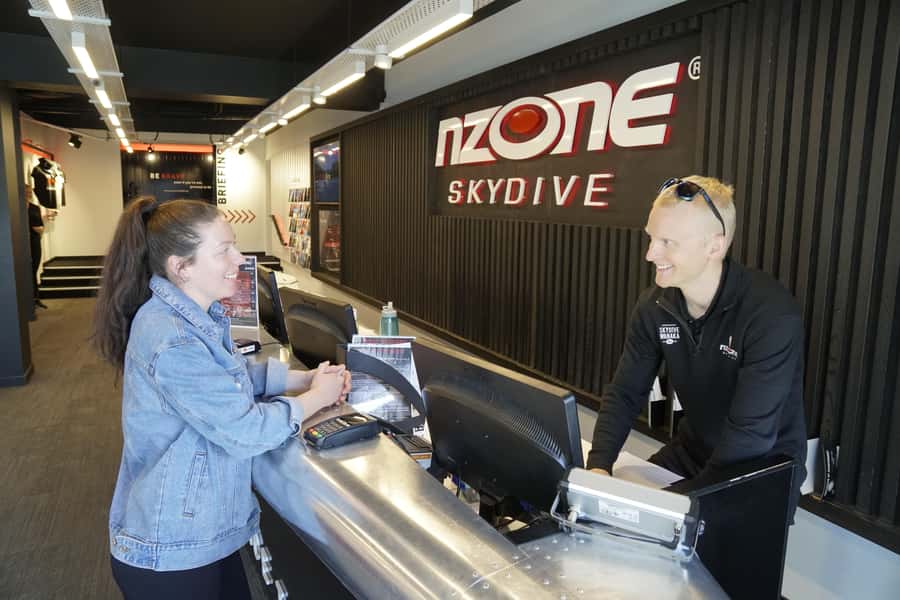
Your day begins at 35 Shotover Street, a handy central meeting point. From there, return transport takes you to the drop zone and brings you back to Queenstown afterward.
This transfer is useful if you are not renting a car. It also keeps the day simple, since you do not need to work out the route to the operating base yourself. Allow the full three to four hours rather than trying to squeeze the activity between two tightly timed plans.
Check-in can feel busy when several groups arrive together. The staff work through the paperwork and preparation, but the pace may not be instant. I would arrive ready to wait, especially if earlier weather cancellations have created a backlog.
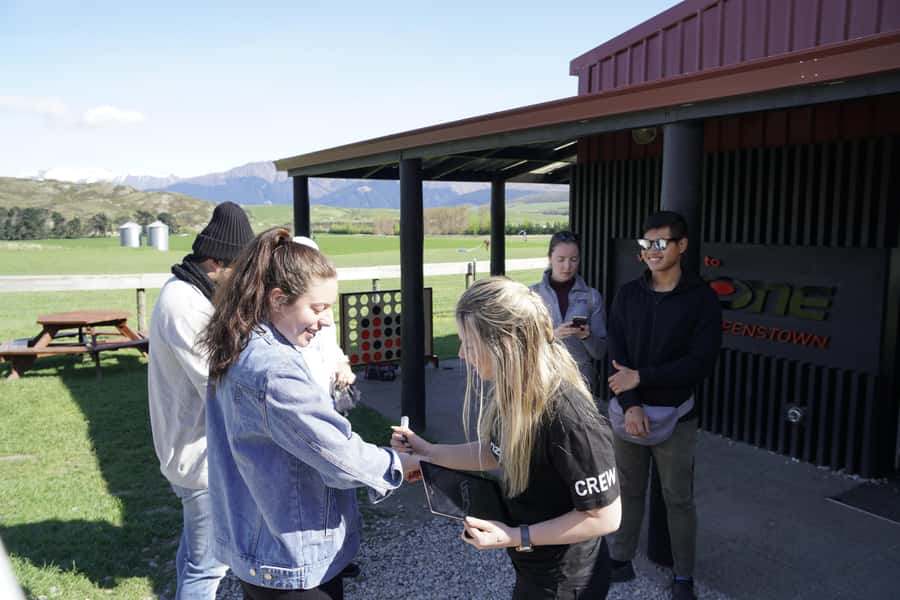
That waiting is not always wasted time. The base has outdoor games, free Wi-Fi, internet kiosks, lockers for valuables, and a viewing area where you can watch parachutes being packed and people preparing for their jumps. Drinks, snacks, souvenir clothing, and gifts are available if you want them, though these are extra purchases.
Getting fitted with the harness and safety gear
You receive the main safety equipment, including a jumpsuit, frap hat, goggles, and harness. Closed-toe shoes are required. Leave open-toed footwear and cameras at home, since personal cameras are not allowed.
A tandem master assesses each participant at the drop zone. This is important: booking a place does not remove the need to meet the operator’s safety requirements on the day.
The stated age range begins at six years old. The minimum weight is 40 kilograms, or 88 pounds, and the maximum is 115 kilograms, or 253 pounds. The activity is not suitable for pregnant women, people below the minimum weight, or people above the maximum weight.
You should take the safety warning seriously. Parachuting carries real risk, including problems connected with weather, health, aircraft travel, opening of the parachute, descent, or landing. The equipment and staff are there to manage those risks, but this is still an inherently dangerous activity. If you are uncertain about your health or ability to take part, ask before booking.
Choosing 9,000, 12,000, or 15,000 feet
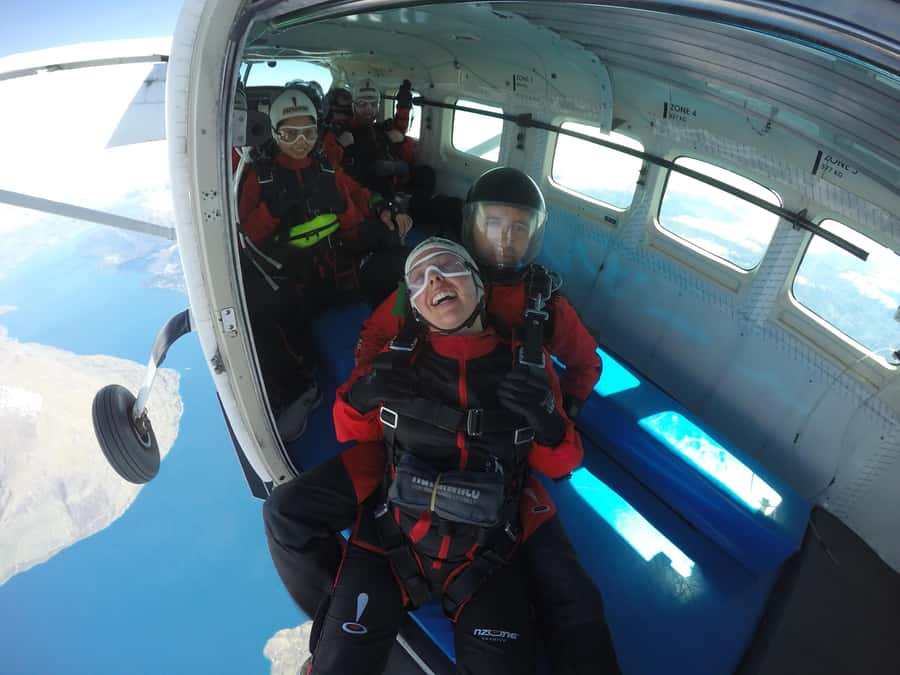
The three jump heights give you a useful choice.
At 9,000 feet, you get the shortest freefall, listed at 30 seconds. This can suit you if you want the experience but would rather limit the time in the most intense part.
The 12,000-foot option gives you more freefall and a longer build-up in the aircraft. It is a sensible middle ground for many first-timers.
At 15,000 feet, the freefall can last up to 60 seconds. Several people who chose this level felt the extra time was worth it, and some wished they could stay in the air longer. The extra height does not change the basic sequence, but it gives you more time to take in the sensation before the parachute opens.
I would choose 15,000 feet if the budget allows and you are already committing to the jump. The difference between the heights is less about fear than about time. Once you are out of the aircraft, the key moment has already happened. The higher option simply gives you longer to experience freefall and look around.
A different way to spend a day out of Queenstown:
- Queenstown: Walter Peak Gourmet BBQ & Lake Whakatipu Cruise
★ 4.8 · 2,713 reviews - Queenstown: Milford Sound Coach & Cruise Full-Day Trip
★ 4.7 · 2,592 reviews - Shotover River Extreme Jet Boat Ride in Queenstown
★ 5.0 · 2,540 reviews - Small Group, Award Winning Milford Sound Day Experience & Cruise
★ 5.0 · 2,416 reviews
The aircraft ride up over Queenstown
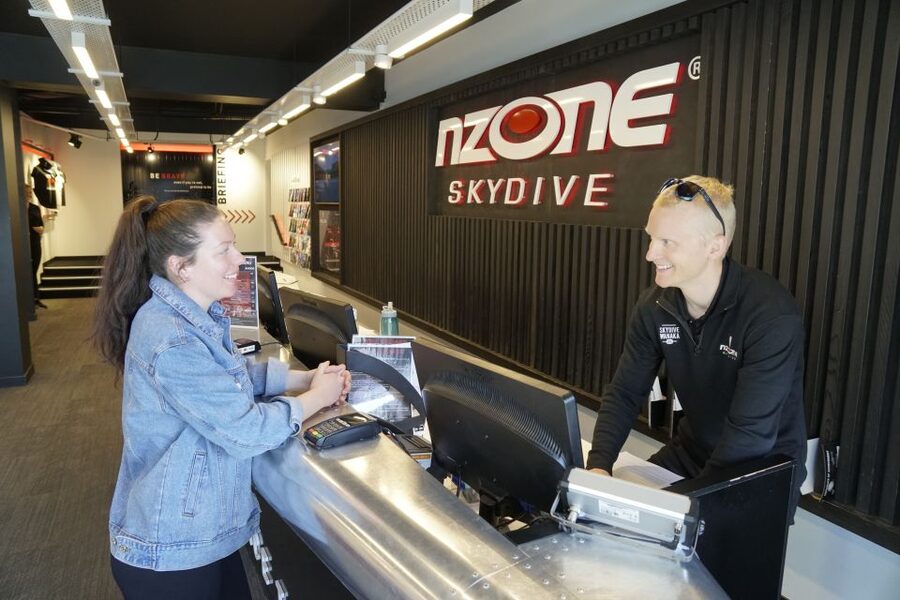
The flight to altitude is part of the attraction, not just a means of getting to the door.
You’ll have about a 15-minute scenic flight before the jump, with views across the Southern Lakes and Queenstown’s mountain country. The approach to altitude gives you a chance to absorb the setting and settle your nerves. It also lets your tandem master check in with you and review what will happen.
The aircraft door is the point where nerves often peak. You are harnessed to an experienced tandem master, and your guide manages the technical side of the exit. Guides such as Chris, Tain, Tim, Connor, and Wilmer are praised for keeping the mood light without treating the safety briefing casually.
That balance matters. You want clear instructions, not empty bravado. A good tandem master can explain the body position, timing, and landing process in simple terms, then give you room to enjoy the moment.
Up to 60 seconds of freefall
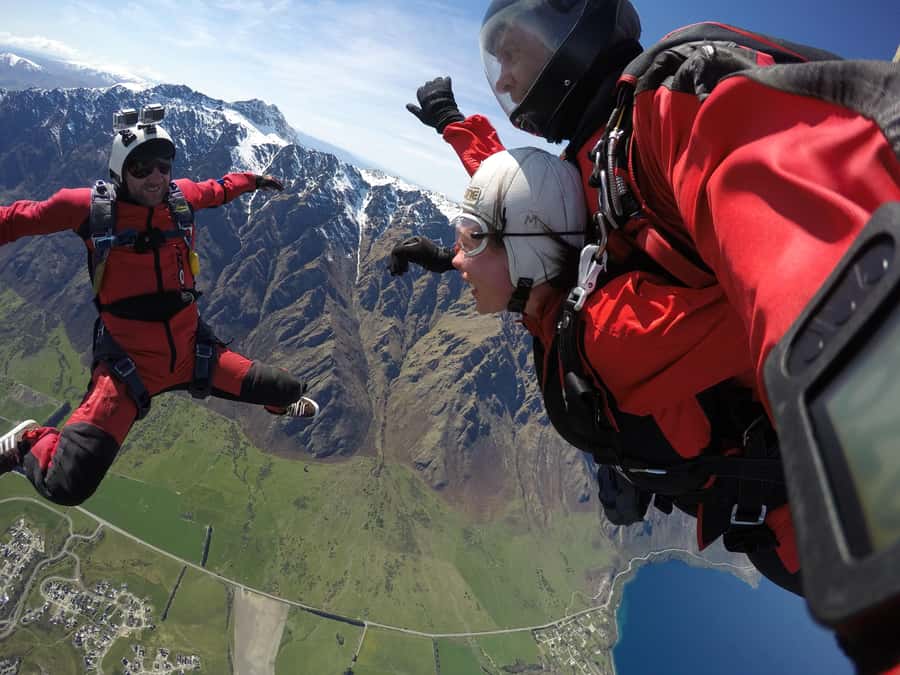
The aircraft door opens, and the experience changes instantly.
You leave the plane harnessed to your tandem master and accelerate to roughly 200 kph. The freefall lasts from about 30 to 60 seconds, depending on your chosen height. At first, you may be focused on the noise and wind. Then the scenery begins to register: mountains, water, and the wide basin spreading below.
This is not a quiet sightseeing flight. The wind is strong, the sensation is physical, and the first moments can feel like sensory overload. You should expect to follow your tandem master’s instructions rather than trying to control the experience yourself.
The short duration is both a strength and a limitation. It keeps the most intense part from dragging on, but if you love the feeling, it will probably seem over quickly. That is one reason the 15,000-foot option appeals to people who want more time in freefall.
Five minutes beneath the parachute
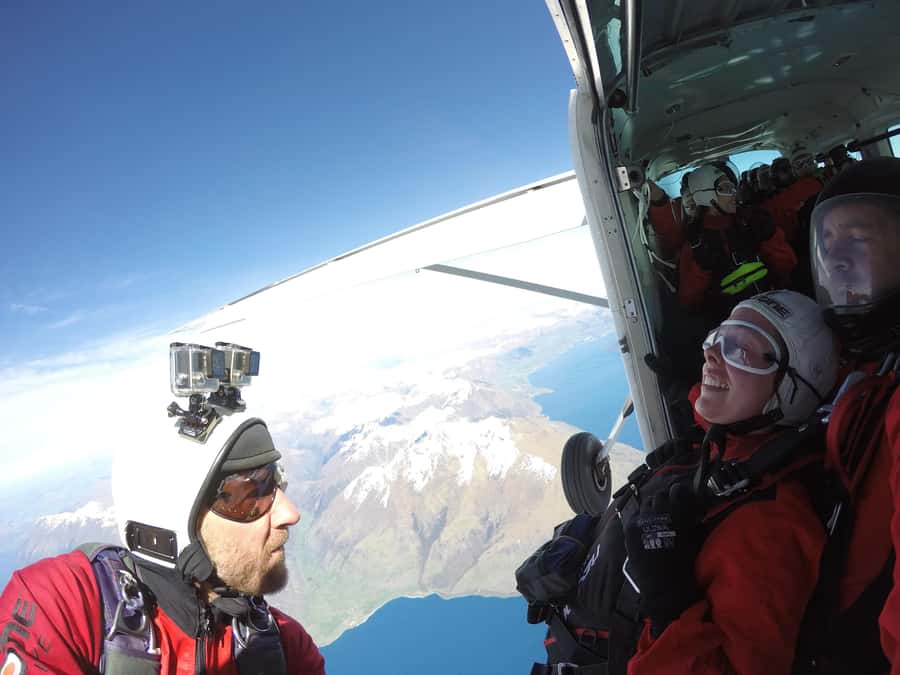
When the parachute opens, the pace changes completely. The freefall gives way to a roughly five-minute canopy ride above the Wakatipu Basin.
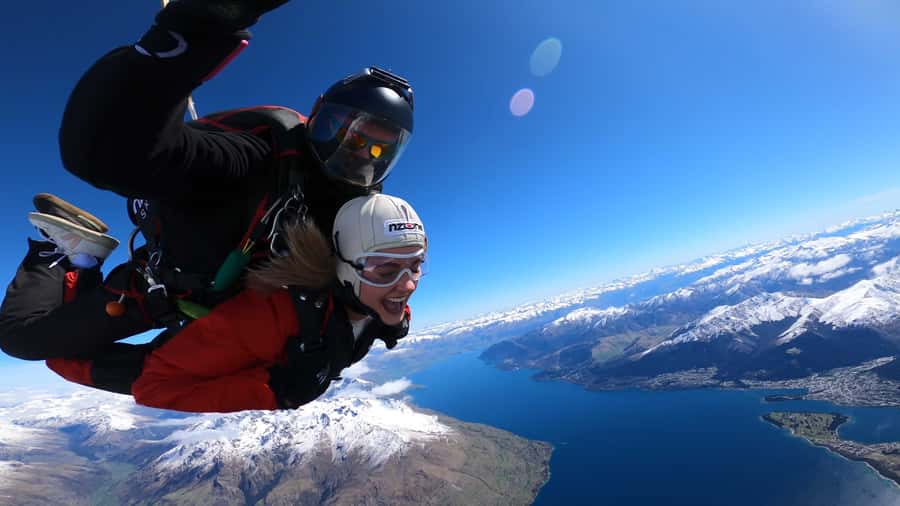
This is when you can properly admire the view. You may be able to look toward Lake Wakatipu, Queenstown, the Remarkables, and the surrounding peaks without the rush of the initial fall. The canopy section is less about raw speed and more about taking in the setting.
For some people, this is the most memorable part because the scene becomes easier to appreciate. You are still high above the ground, but the movement is slower and more controlled. Your tandem master remains in charge of the parachute and landing, while you get the best chance to look around.
The landing brings you back to the drop zone, where you can collect your belongings and watch other jumps before the return transfer. The full activity usually takes three to four hours, though actual timing depends on the schedule and weather.
What the photos and videos are worth
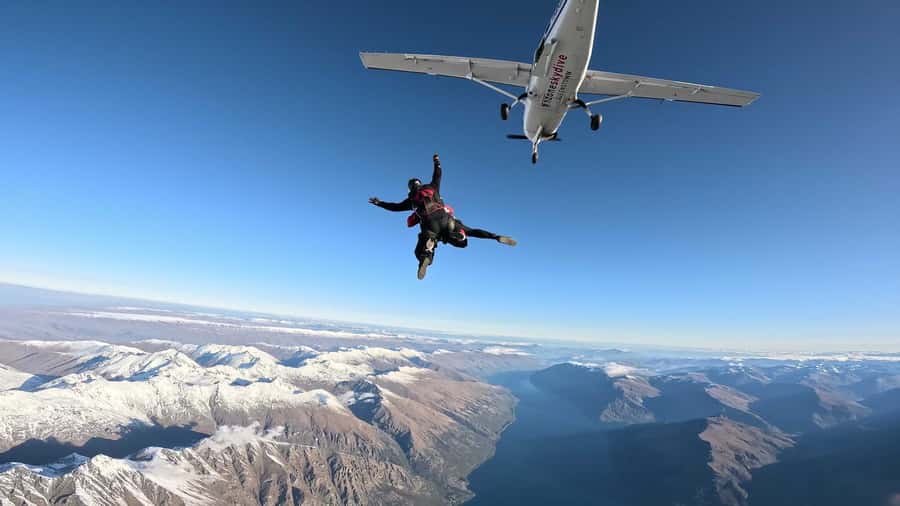
Photo and video packages are not included in the $214 price. They are an optional extra, and they are one of the few consistent complaints about the cost of the experience.
The appeal is obvious. You cannot take your own camera, and you may remember the jump in fragments once the adrenaline fades. A package gives you something to watch later, including images of the exit, freefall, parachute ride, and landing, depending on the option you buy.
The quality can vary between camera operators. Some people receive excellent photos and videos, while others feel the camera work is less impressive. One practical point is that delivery can be quick. Some packages have arrived by personal link soon after the jump, even during the ride back to Queenstown.
I would decide before check-in how much the footage matters to you. If you mainly want the experience, skip it and keep the base price under control. If this is a major personal milestone, the extra cost may be easier to justify. Ask about the current package prices before you commit, since they are separate from the booking.
The human side of a frightening activity
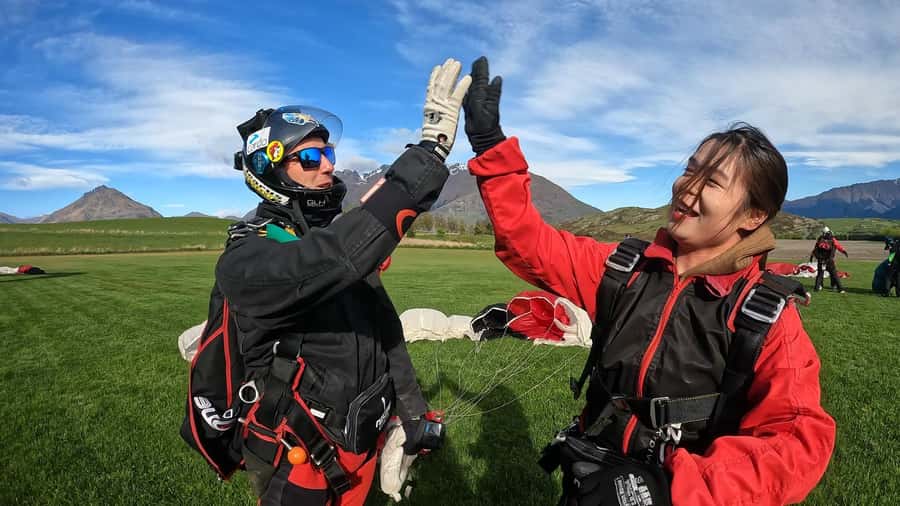
The most important part of the operation is not the souvenir shop or the view. It is the person attached to your harness.
First-timers often arrive excited, then become nervous when they see someone else leave the aircraft. That is normal. Your tandem master should give you clear instructions and steady reassurance without pretending the activity is risk-free.
Guides named in the feedback include Chris, who helped a nervous first-timer relax; Tain, who made the process feel safe from the start; Tim, who checked in at regular points; and Wilmer, who explained each stage carefully and brought extensive jump experience. Other guides, including Luke, Connor, Sam, Gabriel, Uros, and Sotero, are also singled out for a calm and friendly approach.
You do not choose your tandem master when booking, so the best advice is to ask questions when you meet them. Tell the guide if you are nervous. Listen carefully during the briefing. The staff are used to first-timers, and asking for clarification is far better than quietly guessing.
Weather delays and the risk of a changed schedule
Weather is the biggest practical uncertainty.
A jump can be postponed or cancelled because of poor conditions. One person had a booking cancelled twice in the same day, while others were able to rearrange easily after a weather cancellation. This is not a flaw unique to this activity. A safe jump depends on conditions that can change quickly.
Give yourself flexibility. Do not book the jump on the morning of an international flight, a fixed tour, or another activity you cannot move. If you have several days in Queenstown, placing the jump early in your stay gives you a better chance to reschedule if needed.
The cancellation terms are traveler-friendly: you can cancel up to 24 hours in advance for a full refund, and you can reserve now and pay later. Weather on the day is still the key issue, so flexible planning matters more than a generous cancellation window.
Who will enjoy this most
This suits you if you want a major adrenaline activity with a strong scenic payoff. It is especially good for first-time jumpers who want an experienced tandem master handling the equipment and procedures.
The three height choices also make it easier to match the experience to your comfort level. Choose 9,000 feet if the idea of a long freefall bothers you. Pick 12,000 feet for a middle option. Go for 15,000 feet if you want the longest freefall and can accept the higher price that may come with the upgrade.
It is less suitable if you dislike waiting, need a guaranteed finish time, or have only a few hours before another booking. It is also not the right choice if the extra cost of photos and video would sour the day.
Should you book the Queenstown tandem skydive?
Book it if you want Queenstown’s scenery from an unforgettable viewpoint, not just another lookout or boat ride. The combination of a 15-minute scenic flight, fast freefall, and five-minute canopy ride gives you three distinct parts to the experience.
I would choose 12,000 or 15,000 feet, with 15,000 feet my pick for value if you are already willing to jump. Leave room in your schedule for weather and waiting, wear closed-toe shoes, and decide in advance if you want the photo package.
Skip it if you need a tightly timed itinerary or want a low-cost activity with no extra purchases. For everyone else, this is one of Queenstown’s clearest cases of paying for both the thrill and the view.
FAQ
Where does the Queenstown tandem skydive begin?
The meeting point is 35 Shotover Street in central Queenstown. Return transfers to Queenstown are included.
How long does the whole experience take?
Allow three to four hours. This includes transport, check-in, preparation, the scenic flight, the jump, the canopy ride, and the return journey.
How high can I jump from?
You can choose a 9,000-foot, 12,000-foot, or 15,000-foot tandem skydive.
How long is the freefall?
The freefall lasts about 30 to 60 seconds, depending on the jump height you choose.
How long is the parachute ride?
The canopy ride lasts about five minutes above the Wakatipu Basin.
What is included in the price?
The price includes the tandem skydive, tandem master, safety equipment, jumpsuit, frap hat, goggles, harness, scenic flight, return transfer, onsite lockers, Wi-Fi, internet kiosks, and access to base facilities.
Are photos and videos included?
No. Photo and video packages are optional extras and must be purchased separately.
What are the age and weight limits?
The minimum age is six years. Participants must weigh at least 40 kilograms, or 88 pounds, and no more than 115 kilograms, or 253 pounds. The activity is not suitable for pregnant women.
Latest Queenstown trips added
- Wines and Views Private Wine Tour of Otago from Queenstown★ 5.0 · 4 reviews
- Mt Aspiring Full Day Canyon ex Queenstown or Wanaka★ 5.0 · 12 reviews
- TSS Earnslaw Cruise & Walter Peak Garden to Table in Queenstown★ 5.0 · 13 reviews
- 30-Minute High-Speed Thrill Queenstown Jet Boat Adventure★ 5.0 · 9 reviews
- Ultimate Off-Roading In Gibbston Valley★ 5.0 · 6 reviews
- Tunnels to Station On E-Bikes★ 5.0 · 3 reviews
- AuthenticAs Paradise – Professional Photography & Exclusive Guided 4WD Tour★ 5.0 · 3 reviews
- Queenstown Sunrise Glacier Scenic Flight by Glenorchy Air★ 5.0 · 4 reviews
Queenstown Skydiving, compared.
Browse the lists this tour appears in