
Reviewed · QUEENSTOWN ATTRACTION TICKETS
Kiwi Park Queenstown Admission
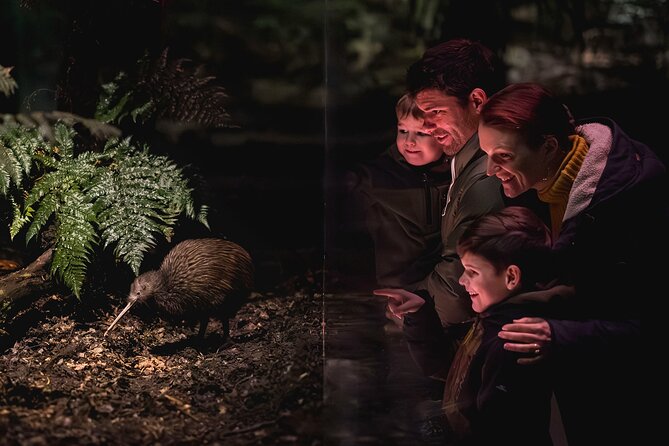
Seeing a kiwi in the wild is a rare stroke of luck. At Kiwi Birdlife Park, you have a far better chance of spotting New Zealand’s famous flightless bird in a darkened enclosure built to mimic its night-time world. The kiwi house is the main event, but the park also brings you close to tuatara, kea, kereru, kakariki, weka, and birds of prey.
I like the all-day admission, which lets you plan around the conservation show and kiwi feeding times rather than rushing through. I also like the park’s real conservation role, including injured wildlife care and kiwi breeding for release into the wild. The main drawback is value: at $39.72 per person, some visitors may find the five-acre park small for the price, especially if the kiwi stay hidden in the dark.
Key points to know before you go
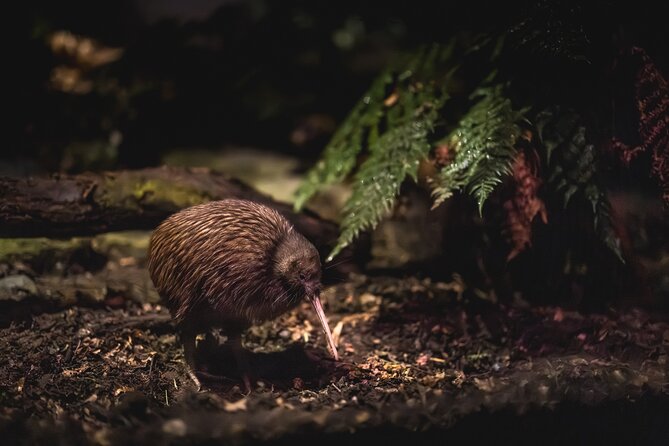
- Kiwi viewing happens in a dark nocturnal enclosure, and you may need time for your eyes to adjust before the birds become easy to spot.
- The conservation show is one of the best uses of your time, with native birds flying free in a netted outdoor area.
- Your ticket lasts all day, so you can return to an enclosure or fit the visit around Queenstown sightseeing.
- The park sits in central Queenstown, right near the Skyline gondola entrance and public transport.
- A free audio guide is included, with language options noted in the park information, including Mandarin.
- Allow about two to three hours, though a quick visit focused mainly on kiwi can take closer to 90 minutes.
Why the kiwi house is the star attraction
Kiwi are nocturnal, shy, and difficult to find in the bush. They spend daylight hours resting in burrows, so a normal outdoor enclosure would not give you much to see. Kiwi Park solves that problem with a darkened house where the birds follow their natural night routine while you watch from the viewing area.
The room is genuinely dark. That is good for the kiwi, but it can test your patience. Give your eyes time to adjust, keep voices low, and avoid expecting a bright, close-up wildlife display. You may first see only a shadow moving across the floor. Then the long bill, rounded body, and quick searching movements begin to appear.
Several people find the kiwi surprisingly active once they can see them. The birds search for food, move around their enclosure, and make soft or unusual calls that are easy to miss in the wild. The park also offers kiwi encounters and feeding times throughout the day, with schedules changing by season.
From October through April, kiwi encounter times are listed at 10am, 11am, 12:15pm, 1pm, 2:15pm, 3pm, 4:15pm, and 5pm. From May through September, the times are listed at 10am, 11am, 12:15pm, 1pm, 2pm, 3:45pm, and 4:43pm. Check the current timetable when you arrive, since seasonal schedules matter here.
If seeing a kiwi is your main reason for coming, make this your first planned stop. Arriving early gives you more choice of session and leaves time to return if your first look is disappointing. You cannot control what the birds do, but you can control how much time you allow.
More Attraction Tickets in Queenstown:
- Queenstown: Minus 5 Ice Bar Experience with Drink Options
★ 4.7 · 592 reviews - Fear Factory Queenstown
★ 4.5 · 248 reviews - Queenstown: Ice Bar Entry with Warm Winter Gear and Drink
★ 4.8 · 162 reviews
Start with the conservation show
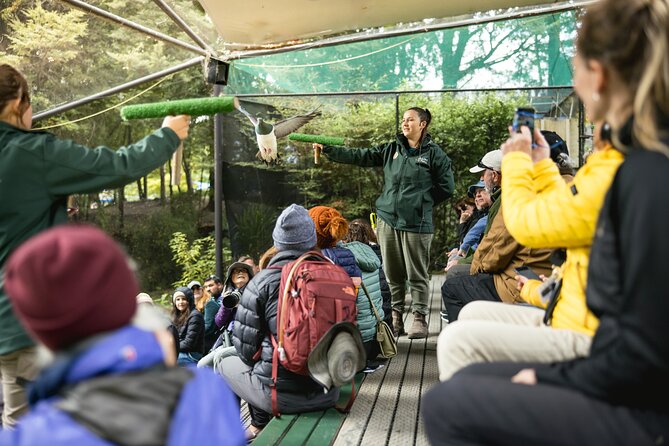
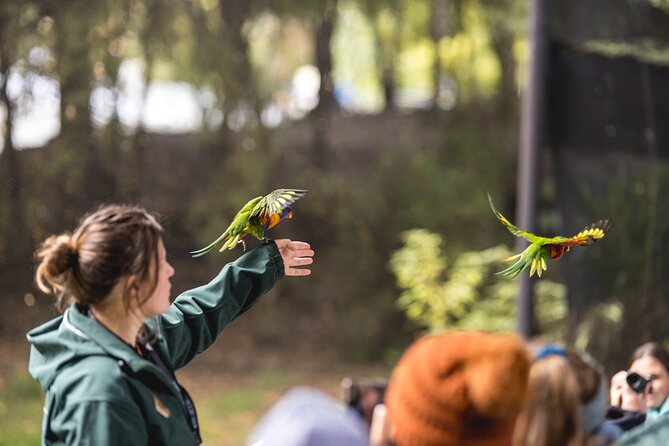
The New Zealand Conservation Show gives the visit a useful frame. It is held two or three times a day, depending on the season, in an outdoor area enclosed by netting. Native birds can fly free within the space, giving you a better look at their size, movement, and calls than a static display would.
From October through April, shows are listed at 11:30am, 1:30pm, and 3:30pm. From April through September, they are listed at 11:30am and 3pm. The schedule overlaps slightly in the source information, so confirm the exact times on the day.
The show may include birds such as kakariki, a native parakeet, and kereru, New Zealand’s large wood pigeon. You can also learn about pateke, buff weka, Antipodes Island parakeets, and birds of prey. The format is part education and part close encounter, with keepers explaining how these animals live and why some need human help.
I would begin here if the timing works. It introduces the park’s work before you wander through the exhibits, and it is especially useful for children who need a reason to pay attention to birds that are not as instantly famous as the kiwi. The talks are also described as informative and funny, which helps keep the presentation from feeling like a classroom lesson.
Meet the tuatara, a living link to the past
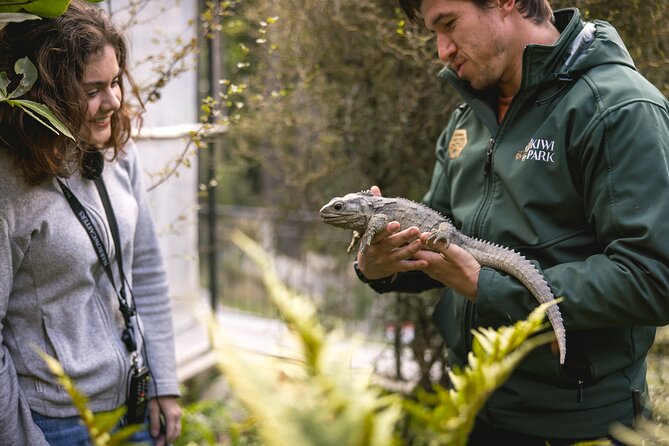
The Tuatara Encounter is one of the park’s most distinctive stops. The tuatara is a reptile found only in New Zealand and is often described as a living dinosaur because of its ancient lineage. It is not a dinosaur, but the comparison gives you a sense of why this animal captures so much attention.
The encounter gives you a close look at a creature that many people would never spot in the wild. It is less immediately lively than the kiwi house, but it adds context to the visit. New Zealand’s native wildlife is not only about colorful birds. The tuatara shows another side of the country’s natural story.
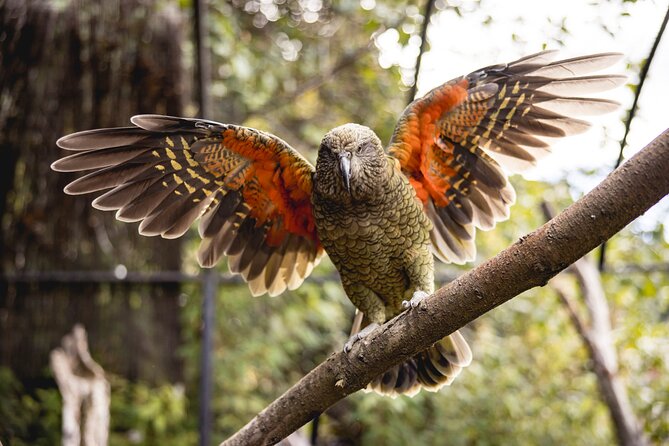
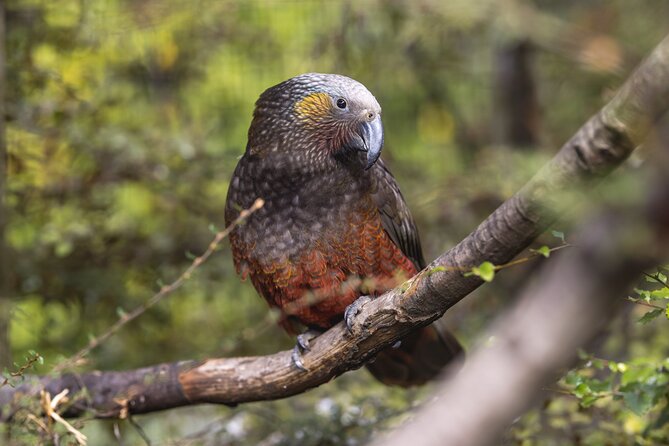
The park also presents other native species in carefully arranged enclosures. You may see kea, kereru, kakariki, pateke, buff weka, and Antipodes Island parakeets, along with birds of prey. The kea exhibit is a particular highlight for many people because these mountain parrots are intelligent, curious, and visually striking.
Some enclosures allow you to step inside the bird area, which gives you a closer view than a standard fenced exhibit. You still need to follow the park’s instructions and keep noise under control, especially near the kiwi house. Loud voices can make wildlife viewing harder for everyone.
A forest walk in the center of Queenstown
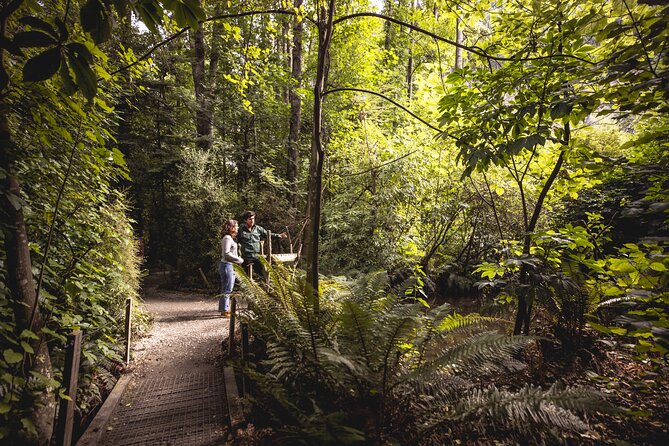
Kiwi Park covers five acres, or about two hectares, of native bush in the middle of Queenstown. That location is a major advantage. You can fit the park around the gondola, town shopping, a meal, or a rainy-day change of plans without arranging a long drive.
The paths lead past trees, streams with trout, bird enclosures, and conservation displays. It is not a huge zoo, and that is worth understanding before you pay. You will not spend a full day walking from one large habitat to another. Most people should plan on two to three hours, with a shorter visit possible if kiwi are the clear priority.
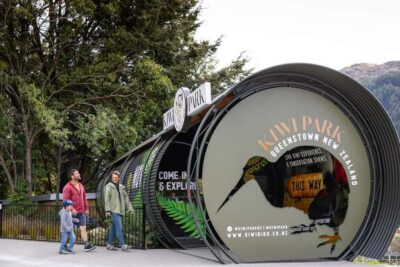
The setting makes the park feel calmer than its central location suggests. The entry is reached through a tunnel near the base of the gondola, and then the bush opens up into a compact wildlife area. This contrast is part of the charm: you can move from Queenstown’s busy tourist center into a shaded walk with native birds within minutes.
Some paths are steep, so the park may be harder for people with mobility limits. Comfortable walking shoes are a sensible choice, and sun protection is recommended. The park information says most people can take part, but the slope and outdoor sections are worth keeping in mind.
A different way to spend a day out of Queenstown:
- Queenstown: Walter Peak Gourmet BBQ & Lake Whakatipu Cruise
★ 4.8 · 2,713 reviews - Queenstown: Milford Sound Coach & Cruise Full-Day Trip
★ 4.7 · 2,592 reviews - Shotover River Extreme Jet Boat Ride in Queenstown
★ 5.0 · 2,540 reviews - Small Group, Award Winning Milford Sound Day Experience & Cruise
★ 5.0 · 2,416 reviews
The audio guide makes an independent visit easier
A complimentary audio guide comes with admission. It lets you explore at your own pace instead of trying to stay with a group or read every sign in order. This suits the park well because wildlife does not always appear on schedule.
The audio equipment is available in different languages, with Mandarin specifically noted. That can help families and visitors who are more comfortable learning in a language other than English. Pick up a map as well, since the paths and exhibits are spread through the bush and the signage can take a moment to understand.
Use the audio guide selectively. You do not need to listen to every track before moving on. I would use it to add context at the tuatara and conservation displays, then spend quiet time watching the birds. At the kiwi house, the most useful information often comes from the keeper presentation and from simply waiting for your eyes to adjust.
How to plan the visit around the timetable
Kiwi Park is open daily from 9:30am to 5:30pm. Your admission is valid for the whole day, which is helpful if you want to see the kiwi, leave for lunch, and return for a conservation show.
A simple plan works well:
- Arrive near opening time and check the day’s kiwi encounter and conservation show schedule.
- Attend the first suitable kiwi session, especially if the bird is your main goal.
- Walk through the native bird exhibits and Tuatara Encounter.
- Join the conservation show later in the morning or afternoon.
- Return to the kiwi house if your first viewing was brief or the birds were tucked away.
The park has a cafe where you can stop for tea and a bite to eat, along with gift and honey shops. These are useful extras, but they should not be the reason you buy admission. The wildlife and conservation work are the core of the experience.
There is no hotel pickup or drop-off, and parking is not included. The central location means you can reach it by public transportation, and it is close to the Skyline gondola. If you are already in Queenstown’s center, a separate transfer is unnecessary.
What the $39.72 admission buys you
The price is reasonable if you want a focused introduction to native New Zealand wildlife and you make use of the included programs. You receive all-day entry, kiwi viewing, the conservation show, and the audio guide. The ticket also supports a park involved in wildlife rehabilitation and kiwi breeding for release into the wild.
Value depends on your expectations. If you expect a large zoo with dozens of big animal habitats, you may leave feeling that there is not enough to see. The park is compact, and some displays are quiet rather than dramatic. The kiwi may be hard to see at first, and the dark enclosure will never produce the bright photographs shown in some promotional images.
If you see several active kiwi, attend a keeper talk, watch the conservation show, and take time with the bird exhibits, the admission feels more justified. If you rush in for 45 minutes and the birds stay out of sight, it will feel expensive.
Families often get good use from the visit because the mix changes every few minutes. Children can look for kiwi, meet a tuatara, watch free-flying birds, and learn about conservation without committing to a full-day attraction. Adults who already have extensive wildlife experience may find the park more modest, but the central location keeps the time commitment low.
A good rainy-day choice, with a few cautions
Queenstown is known for outdoor activities, but weather can quickly disrupt plans. Kiwi Park gives you a useful backup for a cold or wet day. Much of the walking is outdoors, yet the dark kiwi house, covered areas, and scheduled talks give the visit structure.
Do not treat it as a completely indoor attraction. Wear comfortable shoes and sun protection when conditions are dry. The forest paths can include slopes, and the conservation show takes place outdoors.
Quiet behavior matters most in the kiwi house. Children may need a reminder that this is not a bright aquarium or petting zoo. Loud talking can make it harder to see the birds and distract from the keeper’s explanation. If your group can wait calmly for a few minutes, the reward is a far better view.
The park is also a good choice for anyone who wants to support conservation in a direct way. Its work includes caring for injured wildlife and breeding kiwi for release. That gives the admission a purpose beyond a quick wildlife photo.
Who should book Kiwi Park Queenstown?
I would recommend it to families, first-time visitors to New Zealand, bird lovers, and anyone determined to see a kiwi without relying on luck in the wild. It also suits people who want a short central activity that can fit around the gondola and other Queenstown plans.
I would think twice if you dislike dark viewing rooms, have limited walking ability, or expect a large wildlife park. The compact size is convenient, but it also limits the number of exhibits. The best visit comes from treating Kiwi Park as a conservation-focused native wildlife park, not as a major zoo.
Free cancellation is available if you cancel at least 24 hours before the experience start time. Changes or cancellations inside that window are not refunded, so keep the local cut-off time in mind when weather or plans change.
Should you book it?
Book Kiwi Park if seeing a kiwi is high on your list and you want a reliable, central opportunity to do it. Arrive early, allow your eyes to adjust in the kiwi house, and plan around a conservation show. The tuatara, kea, native pigeons, parakeets, and forest walk add enough variety to make the visit more than a single dark room.
Skip it if you want a full-day attraction with many large animals or if $39.72 feels high for a compact park. For most visitors, though, the combination of rare kiwi viewing, useful keeper talks, and real conservation work makes it a worthwhile Queenstown stop.
FAQ
How long should I allow for Kiwi Park Queenstown?
Plan on about two to three hours. A shorter visit of around 90 minutes is possible if your main goal is seeing the kiwi and you do not spend much time at the other exhibits.
What are the opening hours?
Kiwi Park is open Monday through Sunday from 9:30am to 5:30pm.
Does admission include kiwi viewing?
Yes. Admission includes kiwi viewing, the conservation show, and a complimentary audio guide.
When are the conservation shows held?
From October through April, shows are listed at 11:30am, 1:30pm, and 3:30pm. From April through September, they are listed at 11:30am and 3pm. Confirm the current schedule when you arrive.
Can I see kiwi during the day?
Yes. Kiwi are shown in specially designed darkened enclosures that mimic their nocturnal environment. The viewing area is dark, and you may need time for your eyes to adjust.
Is cancellation free?
You can cancel up to 24 hours before the experience start time for a full refund. Cancellations or changes made less than 24 hours in advance are not refunded.
Latest Queenstown trips added
- Mt Aspiring Full Day Canyon ex Queenstown or Wanaka★ 5.0 · 12 reviews
- Wines and Views Private Wine Tour of Otago from Queenstown★ 5.0 · 4 reviews
- TSS Earnslaw Cruise & Walter Peak Garden to Table in Queenstown★ 5.0 · 13 reviews
- Ultimate Off-Roading In Gibbston Valley★ 5.0 · 6 reviews
- 30-Minute High-Speed Thrill Queenstown Jet Boat Adventure★ 5.0 · 9 reviews
- Tunnels to Station On E-Bikes★ 5.0 · 3 reviews
- AuthenticAs Paradise – Professional Photography & Exclusive Guided 4WD Tour★ 5.0 · 3 reviews
- Queenstown Sunrise Glacier Scenic Flight by Glenorchy Air★ 5.0 · 4 reviews
Queenstown Attraction Tickets, compared.





Browse the lists this tour appears in